
See Our Latest Blogs
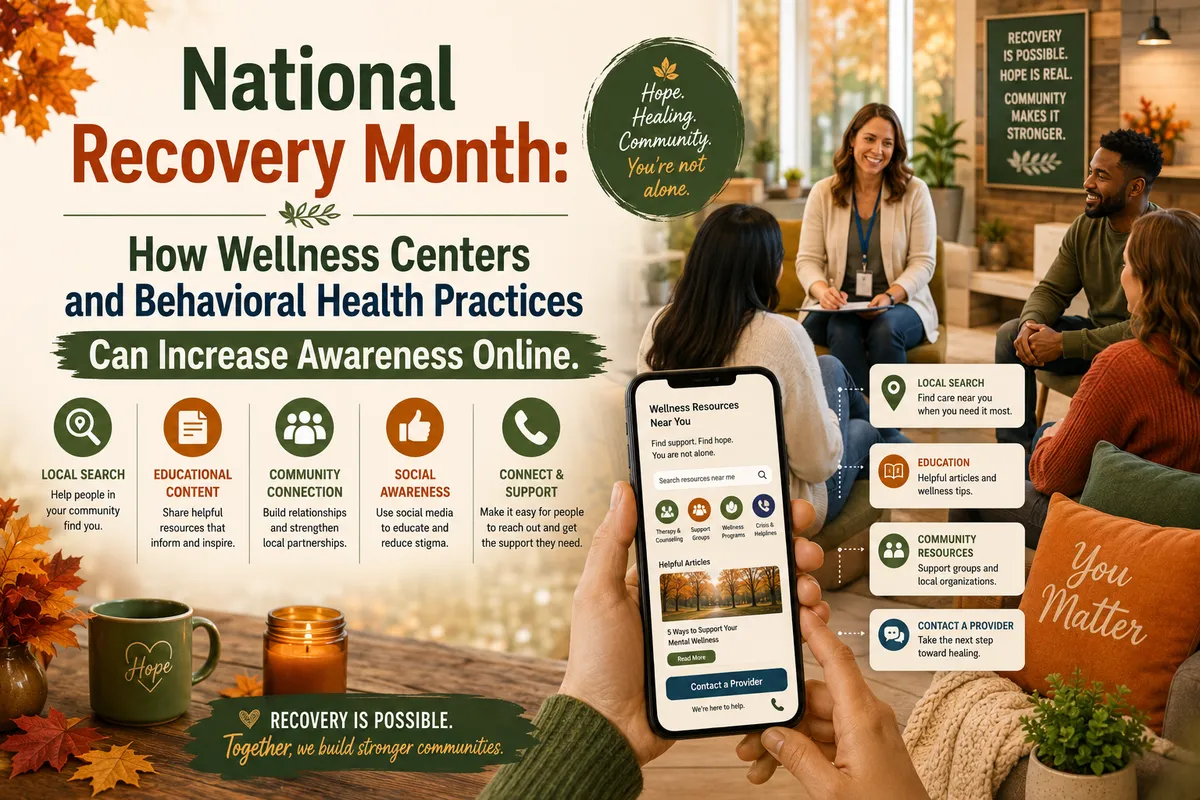
National Recovery Month: How Wellness Centers and Behavioral Health Practices Can Increase Awareness Online
September is National Recovery Month, a time to recognize recovery, increase awareness, celebrate progress, and highlight the people, professionals, families, and communities supporting individuals along the way.
For behavioral health practices, wellness centers, recovery-focused organizations, and other healthcare providers, September also creates an opportunity to examine an important question:
Can people in your community easily find trustworthy information about the support and services available to them?
For many organizations, the answer depends heavily on their digital presence.
Someone looking for behavioral health or recovery support may begin privately, often from a phone or computer. They may search for local resources, read educational articles, look at provider websites, examine reviews, or try to understand what seeking help might involve before making contact.
That makes digital marketing about much more than promotion.
Done responsibly, it can help healthcare and wellness organizations increase awareness, provide useful information, reduce confusion, strengthen community connections, and create clearer pathways to appropriate services.
Here are several ways organizations can use National Recovery Month to strengthen that digital presence.
1. Lead With Education, Not Promotion
Behavioral health marketing requires a different approach from selling an ordinary consumer service.
People seeking information may be navigating sensitive, personal circumstances. Content should therefore prioritize clarity, dignity, respect, and useful education.
National Recovery Month is an excellent opportunity to create content that answers common questions.
Depending on your organization's services and expertise, educational topics could include:
Understanding available behavioral health services
What to expect when contacting a wellness or behavioral health practice
How families can support someone seeking help
The role of ongoing support in recovery
Frequently asked questions about your programs
Community resources and events
How to begin looking for appropriate support
Information about different levels or types of care
Educational content can help people understand their options without relying on fear or pressure.
The objective should be simple:
Help people make more informed decisions.
💡 Marketing Tip: Before publishing a post, ask whether it provides genuine value to the reader even if they never become a client or patient. If the answer is yes, you're moving in the right direction.
2. Review What People See When They Search for You
Imagine someone hears your organization's name from a physician, friend, family member, community organization, or another provider.
What happens next?
There's a good chance they search online.
What do they find?
Review your digital presence from the perspective of someone encountering your organization for the first time.
Look at your:
Google Business Profile
Website
Search results
Reviews
Social media profiles
Provider information
Service descriptions
Contact information
Ask whether the experience feels clear, current, professional, welcoming, and trustworthy.
Your website should make it easy to understand what your organization does without requiring visitors to decode complicated terminology.
Important information should be easy to locate.
And the next step, whether that's calling, submitting an inquiry, learning about services, or accessing another resource, should be clear.
3. Strengthen Your Local SEO
People often search for behavioral health and wellness resources within their own communities.
Depending on the service, searches might include phrases related to:
“behavioral health services near me”
“wellness center near me”
“mental health services in [city]”
“recovery support near me”
Your organization needs a strong local digital foundation if you want to appear when relevant searches occur.
Start by reviewing:
Your Google Business Profile
Business categories
Address and phone information
Website links
Hours
Service information
Location pages
Website page titles
Meta descriptions
Local directory listings
Your website should naturally communicate the geographic areas you serve.
If your organization has multiple locations, each location may benefit from a useful, dedicated page containing accurate information about that facility and the services offered there.
Avoid creating thin pages that simply repeat city names.
Useful content should always come first.
4. Create a National Recovery Month Content Series
Instead of publishing one post about Recovery Month and moving on, consider building a thoughtful September content series.
One central topic can be divided across several weeks.
For example:
Week 1: What National Recovery Month represents
Week 2: Understanding the role of community support
Week 3: Frequently asked questions about seeking services
Week 4: Local resources and ways to stay connected
You could turn these topics into:
Blog articles
Social media graphics
Short educational videos
Google Business Profile posts
Email newsletters
FAQs
Provider interviews
Community resource posts
This creates consistent communication throughout September without making every post promotional.
It also gives your audience multiple opportunities to encounter useful information.
5. Put Real People Behind Your Organization
Healthcare can feel intimidating from the outside.
Behavioral healthcare may feel particularly unfamiliar to someone who has never contacted a provider before.
Introducing the people behind your organization can make the experience feel more approachable.
Consider featuring:
Provider introductions
Staff spotlights
Professional credentials
Team Q&As
Educational videos from clinicians
Photos of your facility
Explanations of what visitors can expect
Authentic images can also help.
When appropriate, show your real office, team, and environment rather than relying exclusively on generic stock photography.
Prospective clients and families often want to know:
Who will I speak with?
What does this place look like?
What happens when I contact them?
Your digital content can answer those questions before someone ever makes a call.
6. Use Social Media to Reduce Confusion and Build Awareness
Social media gives behavioral health and wellness organizations a way to communicate with their broader communities outside the clinical setting.
National Recovery Month content can include:
Educational facts
Encouraging recovery-focused messages
Community events
Staff perspectives
Resource information
Frequently asked questions
Wellness education
Local partnerships
Links to longer educational content
Keep messaging respectful.
Avoid sensational language, stereotypes, shame-based messaging, or promises about outcomes.
You also don't need every post to end with “Book Now.”
Sometimes the most appropriate call-to-action is:
Learn more.
Read the resource.
Share this information.
Contact our team with questions.
Explore available services.
Trust is built through consistent, useful communication.
7. Build Stronger Community Partnerships
Recovery awareness isn't limited to one healthcare organization.
It involves communities.
September can be an ideal time to highlight and strengthen relationships with other appropriate organizations and professionals.
Depending on your services, potential community connections could include:
Primary care practices
Pharmacies
Hospitals
Mental health professionals
Community organizations
Wellness organizations
Local nonprofits
Educational organizations
Recovery-focused community programs
Digital marketing can amplify those relationships.
For example, organizations can collaborate on educational events, community resource guides, social content, webinars, or awareness campaigns.
When organizations share accurate, useful information together, everyone benefits, especially the people looking for resources.
8. Make Your Website Easier to Navigate
Someone seeking behavioral health information shouldn't have to work hard to understand your website.
Review your navigation.
Can someone easily find:
Your services?
Your location?
Provider information?
Frequently asked questions?
Contact information?
How to get started?
Relevant resources?
Pay particular attention to mobile devices.
People may be researching services privately from their phones, and a confusing mobile experience can create unnecessary barriers.
Use clear headings, readable text, obvious navigation, and straightforward calls-to-action.
Avoid overwhelming visitors with too much information on a single page.
The goal is to help someone move from:
“I'm trying to understand my options.”
to
“I know what this organization provides and what I can do next.”
9. Treat Reviews and Testimonials With Extra Care
Reviews can influence trust in nearly every healthcare sector, but behavioral health organizations should approach them particularly carefully.
Privacy must remain a priority.
When responding publicly to reviews, avoid revealing or confirming sensitive information about the individual.
Organizations should also follow applicable laws, regulations, professional requirements, advertising rules, and platform policies when requesting or using reviews and testimonials.
Your response doesn't need to reveal details to sound compassionate.
Professional, general language can acknowledge feedback while directing someone toward an appropriate private communication channel when needed.
10. Measure Awareness, Not Just Likes
A Recovery Month campaign shouldn't be evaluated only by social media likes.
Look at the larger picture.
Depending on your goals and analytics setup, useful measurements might include:
Website visits
Visits to service pages
Local search visibility
Google Business Profile activity
Calls
Contact-form activity
Resource-page traffic
Blog readership
Social shares and saves
Email engagement
Community-event interest
Pay attention to which educational topics generate meaningful engagement.
Those patterns can help you understand what information your community is actively seeking.
And those insights shouldn't disappear when September ends.
Use them to shape your ongoing digital strategy.
Recovery Awareness Should Continue Beyond September
National Recovery Month provides an important moment for focused communication, but awareness shouldn't disappear on October 1.
The questions people have in September still exist throughout the year.
Continue publishing useful educational content.
Continue updating your resources.
Continue maintaining your local search presence.
Continue improving your website.
Continue strengthening community partnerships.
Continue communicating in ways that treat people with dignity and respect.
Digital marketing is most effective when it's consistent.
For behavioral health and wellness organizations, consistency also helps demonstrate that support, information, and resources remain available beyond an awareness month.
Final Thoughts
National Recovery Month is an opportunity to increase awareness, but responsible behavioral health marketing should always prioritize people over promotion.
The strongest digital strategy doesn't simply ask:
“How can we get more attention?”
It asks:
“How can we make trustworthy information and appropriate services easier for people to find?”
By strengthening local SEO, creating educational content, improving your website, communicating thoughtfully on social media, highlighting your team, and collaborating with community partners, your organization can build a more useful digital presence.
One that educates.
One that builds trust.
And one that helps people better understand the resources available within their community.
BSAM Marketing helps healthcare, behavioral health, and wellness organizations evaluate their digital presence and develop strategies designed to improve visibility, communication, and community awareness.
Book your strategy session below and let's set you up to get a FREE competitor's analysis or a personal digital audit of your business! (valued @ $200):
https://api.leadconnectorhq.com/widget/bookings/discoverywithalicia

Our Philosophy
Our focus is to bridge the gap between health and medical companies and the people who need them most, ensuring that medical expertise reaches the right audience with clarity and trust. We believe that impactful communication in healthcare should be precise, ethical, and patient-centered just like medicine itself. By combining innovation with integrity, we create digital strategies that not only enhance visibility but also foster meaningful connections, empowering health and medical professionals and businesses to serve, educate, and heal more effectively.
Get In Touch
Email: alicia@bsammarketing.com
Address:
2933 Vauxhall Road, Suite 7 Vauxhall, NJ 07088
Assistance Hours
Mon – Fri 10:00am – 4:00pm
Sat - Sun – CLOSED
Phone Number:
(201) 254-3338

MARKETING FOR THE HEALTH AND MEDICAL SECTORS
Helping Healthcare Professionals and Agencies, MedTech, HealthTech, Biotech and Pharmaceutical companies simplify and deliver their message, increase visibility and scale their businesses.


© 2026 BSAM Marketing - All Rights Reserved