

See Our Latest Blogs
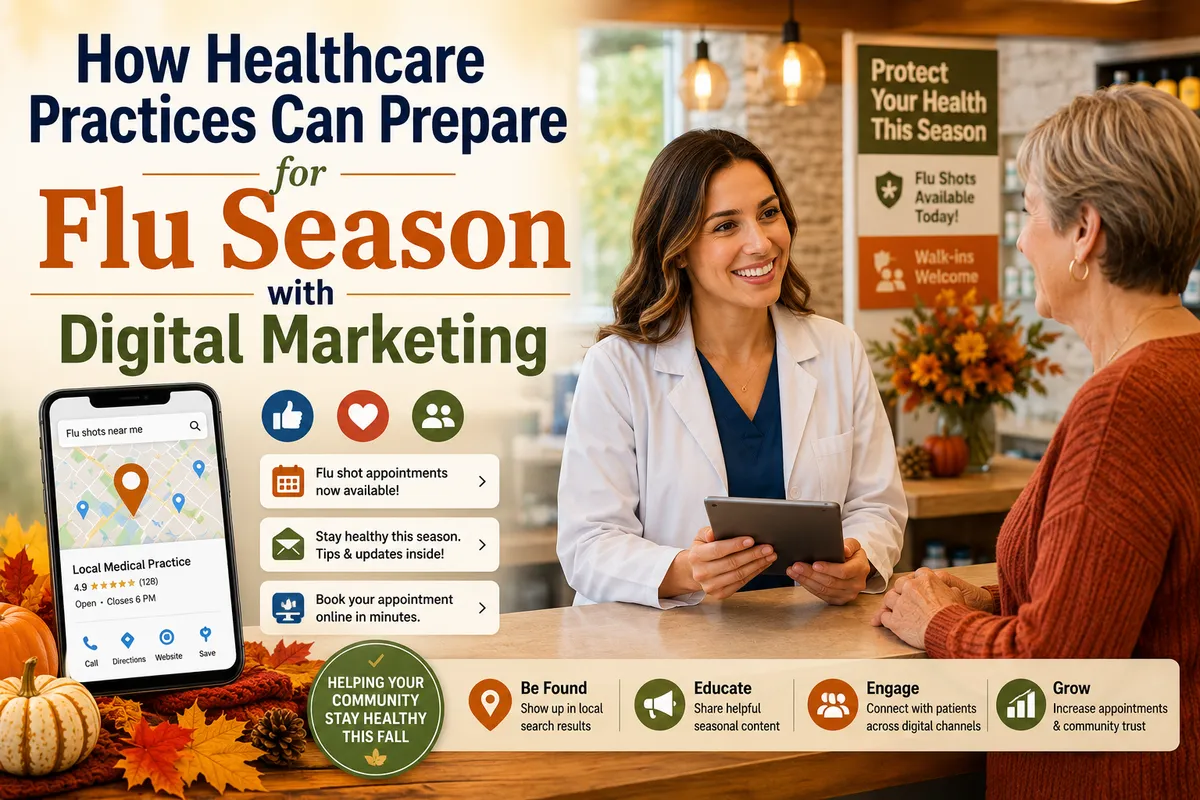
How Healthcare Practices Can Prepare for Flu Season with Digital Marketing
Fall brings cooler temperatures, changing routines, back-to-school schedules—and the beginning of another important flu season.
For healthcare practices, pharmacies, urgent care centers, wellness clinics, and other community health providers, this is an important time to make sure patients know where to turn for seasonal healthcare services.
But simply offering flu-related services isn't enough.
Patients increasingly turn to Google, websites, reviews, social media, and other digital channels before deciding where to seek care. If your practice isn't visible when those searches happen, another provider may be.
That makes early fall an ideal time to review your digital presence.
A thoughtful flu-season marketing strategy can help healthcare organizations educate their communities, communicate available services, improve local visibility, and make it easier for patients to take the next step.
Here are seven ways healthcare practices can prepare.
1. Update Your Google Business Profile for Flu Season
Your Google Business Profile is often one of the first things prospective patients see when searching for healthcare services nearby.
Someone might search:
“flu shots near me”
“pharmacy offering flu vaccines”
“urgent care near me”
“walk-in clinic near me”
“flu testing near me”
Your profile should make it easy for patients to understand who you are, where you're located, when you're open, and which relevant services you provide.
Before flu season gets busier, review your profile and make sure your:
Business name, address, and phone number are accurate
Regular and seasonal hours are current
Website and appointment links work properly
Service information is up to date
Photos accurately represent your location and team
Patient reviews are being monitored and answered
Posts are being published regularly
You can also use Google Business Profile posts to share seasonal information, such as changes in hours, vaccination availability where applicable, appointment information, or educational wellness reminders.
SEO Tip: Keep your information consistent across your website, Google Business Profile, social platforms, and other online directories. Consistency helps search engines—and patients—understand and trust your business information.
2. Create Seasonal Content Before Demand Peaks
Don't wait until your phone is ringing with flu-related questions to start communicating.
September is a great time to begin publishing educational content that answers common questions and helps patients prepare for the months ahead.
Depending on your services and scope of practice, topics might include:
Preparing your family for flu season
When to contact a healthcare provider about flu symptoms
Seasonal wellness tips
Flu prevention in the workplace
Supporting older adults during cold and flu season
Information about vaccination services offered by your organization
A single blog article can also become multiple pieces of content.
For example, one flu-season blog can be repurposed into several social posts, a Google Business Profile update, an email newsletter, short videos, and patient FAQs.
That gives your practice a consistent message across multiple channels without having to create completely new content every day.
3. Make Flu-Related Services Easy to Find on Your Website
Imagine a potential patient arrives on your website after searching for a seasonal healthcare service.
Can they immediately figure out whether you provide it?
If the answer requires several clicks—or a phone call just to find basic information—you may lose that visitor.
Review your website from the patient's perspective.
Make important seasonal services easy to find and clearly explain:
What services you offer
Who the service is intended for
Whether appointments are required
How patients can contact you
Where you're located
Your current hours
How to book an appointment, when applicable
Consider creating a dedicated seasonal page if flu-related services represent a meaningful part of your fall patient demand.
SEO Tip: Use natural, location-relevant language throughout your website. Rather than stuffing pages with repetitive keywords, write useful content that clearly describes your services and the communities you serve.
4. Use Social Media to Educate Before You Promote
Flu-season marketing shouldn't be a continuous stream of “Book Now” messages.
Patients are more likely to pay attention when your content is genuinely useful.
Consider creating a seasonal content mix that includes:
Prevention and wellness reminders
Frequently asked questions
Staff or provider introductions
Behind-the-scenes content
Seasonal service announcements
Community health information
Appointment or scheduling reminders
Myth-versus-fact educational posts
For example, a pharmacy could explain how patients can prepare for a vaccination visit. A primary care office could share general seasonal wellness information. An urgent care center could explain the services available at its location.
Educational content demonstrates expertise while keeping your organization visible throughout the season.
The goal is not to overwhelm followers with promotions. It's to become a familiar, helpful healthcare resource in your community.
5. Re-Engage Existing Patients Through Email and Text
Your existing patient or customer base can be one of your most valuable audiences.
Where appropriate and consistent with applicable privacy, consent, and communication requirements, email and text campaigns can help remind patients about seasonal services and keep your practice top-of-mind.
Your fall campaigns might include:
Seasonal wellness reminders
Available flu-related services
Updated fall hours
Appointment scheduling information
Relevant educational articles
Community health events
Keep these messages short, helpful, and easy to act on.
Every campaign should answer three basic questions:
Why am I receiving this?
Why does it matter to me?
What should I do next?
That final question is especially important.
If you're asking someone to schedule an appointment, don't make them search your website for the booking page. Give them a clear next step.
6. Strengthen Your Online Reputation Before Flu Season Gets Busy
Reviews can strongly influence how prospective patients perceive a healthcare business.
Before seasonal demand increases, take time to evaluate your online reputation.
Ask:
Are recent reviews being answered?
Are patients mentioning the qualities you want your organization to be known for?
Are outdated or inaccurate business listings creating confusion?
Does your online reputation reflect the actual patient experience?
When requesting reviews, follow applicable platform policies and healthcare privacy requirements. Avoid revealing protected patient information when responding publicly—even if a reviewer has disclosed personal medical details themselves.
Your response can remain professional and general while inviting the individual to contact your office privately if necessary.
A strong review profile helps prospective patients feel more confident when comparing local healthcare options.
7. Track What's Actually Generating Patient Interest
One of digital marketing's greatest advantages is measurability.
Don't judge a campaign only by likes or followers.
Depending on your marketing setup, more meaningful indicators may include:
Website visits
Calls from your Google Business Profile
Appointment-page visits
Contact-form submissions
Online bookings
Direction requests
Email engagement
Search visibility for relevant local terms
Establish a baseline before your seasonal campaign begins. Then review performance throughout the fall.
Which topics generate website traffic?
Which pages lead to appointment requests?
Which local searches bring people to your practice?
Which campaigns actually generate meaningful patient actions?
Those answers can help you make smarter marketing decisions throughout flu season—and provide valuable insight for future seasonal campaigns.
Start Your Flu-Season Marketing Before Patients Need You
The best time to become visible isn't after someone needs care.
It's before.
Healthcare marketing works best when your practice consistently educates, communicates, and builds trust with the people it serves.
September gives healthcare organizations an opportunity to prepare their digital presence before fall and winter demand increases.
Review your Google Business Profile. Update your website. Build seasonal content. Strengthen your reviews. Plan patient communications. Make booking and contacting your practice as simple as possible.
Most importantly, look at the experience through your patient's eyes.
When they search for help, can they find you?
When they find you, do they trust what they see?
And when they're ready to take action, have you made the next step obvious?
Final Thoughts
Flu season is more than a seasonal healthcare event. For healthcare organizations, it's also an opportunity to improve communication, strengthen community visibility, and make useful health information easier for patients to find.
You don't need to wait for flu season to reach its busiest point.
A proactive digital strategy can help your organization enter the season with stronger local visibility, clearer patient communication, and a better digital experience.
BSAM Marketing helps healthcare businesses create digital strategies designed around visibility, patient engagement, local growth, and the unique needs of healthcare organizations.
Book your strategy session below and let's set you up to get a FREE competitor's analysis or a personal digital audit of your business! (valued @ $200):
https://api.leadconnectorhq.com/widget/bookings/discoverywithalicia

Our Philosophy
Our focus is to bridge the gap between health and medical companies and the people who need them most, ensuring that medical expertise reaches the right audience with clarity and trust. We believe that impactful communication in healthcare should be precise, ethical, and patient-centered just like medicine itself. By combining innovation with integrity, we create digital strategies that not only enhance visibility but also foster meaningful connections, empowering health and medical professionals and businesses to serve, educate, and heal more effectively.
Get In Touch
Email: alicia@bsammarketing.com
Address:
2933 Vauxhall Road, Suite 7 Vauxhall, NJ 07088
Assistance Hours
Mon – Fri 10:00am – 4:00pm
Sat - Sun – CLOSED
Phone Number:
(201) 254-3338


MARKETING FOR THE HEALTH AND MEDICAL SECTORS
Helping Healthcare Professionals and Agencies, MedTech, HealthTech, Biotech and Pharmaceutical companies simplify and deliver their message, increase visibility and scale their businesses.


© 2026 BSAM Marketing - All Rights Reserved